
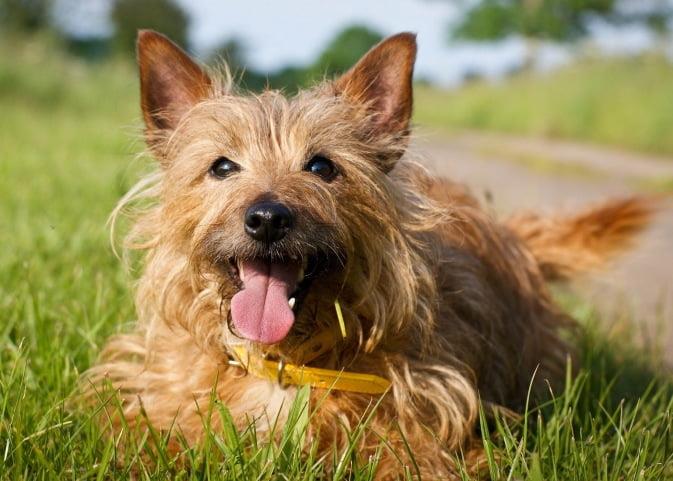
People usually look up the Australian Terrier when they’re weighing up a small dog that can handle real life: a busy household, a smaller yard, a bit of travel, and the everyday question of whether a “terrier” means constant chaos.
The Australian Terrier is small, tough, and alert, with a weatherproof coat and a steady confidence that can surprise first-time owners. Below is a clear, breed-standard grounded guide to size, temperament, exercise, grooming, and the health issues worth watching for.
Australian Terrier at a glance
- Breed type: Terrier
- Country of origin: Australia
- Size: Small
- Typical height: About 25 cm at the withers (females slightly less)1
- Typical weight: About 6.5 kg (females slightly less)1
- Coat: Harsh, straight topcoat with a soft undercoat; around 6 cm long1
- Recognised colours: Blue (steel/dark grey blue) with rich tan, or clear sandy/red (white markings are penalised)1
- Best suited as: Companion dog with a terrier’s working instincts
- Typical lifespan: Often around 11–15 years (individual variation and care matter)6
History and origin
The Australian Terrier was developed in Australia from British terrier types brought by settlers, shaped by local conditions and practical needs: keeping rats and snakes down around homes and farms, sounding the alarm, and being a small, portable companion that could still work when asked.4
Despite the tidy name, the breed wasn’t created for the outback alone. It’s better understood as a tough, adaptable small terrier that suited early Australian life, from town fringes to rural properties, wherever vermin and rough weather were part of the landscape.4
Physical characteristics and appearance
An Australian Terrier is a compact, sturdy little dog with short legs, pricked ears, and a keen, watchful expression. The coat is one of the breed’s signatures: a harsh, straight outer coat over a softer undercoat, designed to resist weather and dirt rather than drape like silk.1
Breed standards describe an ideal height of around 25 cm and weight of about 6.5 kg, with females typically a touch smaller.1
Coat colours (what’s actually “correct”)
Common pet descriptions sometimes list “wheaten” or other shades. In breed standards, the accepted options are:
- Blue (including steel/dark grey blue) with rich tan (tan is specified as not sandy)1
- Clear sandy or clear red (dark shading or smuttiness is undesirable)1
White markings on chest or feet are penalised in the standard.1
Temperament and personality
This is a terrier that tends to feel larger than it looks. Australian Terriers are typically alert, bold, and quick to notice change in their environment, which is why they often make sharp little watchdogs.6
They’re also companionable dogs, often happiest when they can keep a quiet eye on their people and then switch instantly into play. Like many terriers, they can be independent-minded; training usually goes best when it stays simple, consistent, and rewarding rather than forceful.6
Prey drive and barking
Australian Terriers were bred to tackle vermin, and that background can show up as strong interest in moving small animals and fast reactions to sounds and visitors. Early training, calm exposure to everyday noise, and teaching a reliable “quiet” cue helps keep the watchdog talent from becoming a habit of constant commentary.6
Training and exercise needs
Most Australian Terriers don’t need marathon runs, but they do need daily movement and something to think about. A brisk walk, short training sessions, and a bit of sniffing time are often more satisfying than endless ball throwing.6
- Exercise: Aim for consistent daily activity (walks, play, training games). Adjust to age and health.6
- Training style: Positive reinforcement tends to work best; keep sessions short and varied to match a terrier attention span.6
- Mental enrichment: Food puzzles, scent games, and beginner agility-style obstacles suit the breed’s curiosity and athletic build.6
A secure yard matters. This is a breed that may dig, squeeze, and investigate any weakness in a fence if something interesting passes by.
Health concerns to know about
Australian Terriers are generally robust, but like most small breeds they can be prone to a few recurring problems. The key is not to assume trouble is inevitable, but to recognise early signs and choose breeders who health-test and can explain family history clearly.
Patellar luxation (slipping kneecap)
Patellar luxation is a developmental orthopaedic condition where the kneecap shifts out of its normal groove, sometimes causing an intermittent “skip” in the gait, or persistent lameness in more severe cases.2
Legg-Calvé-Perthes disease (hip problem in small dogs)
This condition affects the head of the femur and can cause hindlimb lameness and pain, typically in young dogs. If your puppy starts limping or becomes reluctant to jump or play, it’s worth a prompt veterinary check rather than waiting it out.3
Everyday prevention that helps
- Keep your dog lean (extra weight worsens joint stress).
- Prioritise dental care: small dogs can develop dental disease quickly.
- Use regular check-ups to catch issues early, especially if you notice a change in gait or activity.
Grooming and coat maintenance
The coat is designed to be practical: harsh, straight, and protective. It does best with steady, simple care rather than frequent clipping.
- Brushing: Once or twice a week to remove loose hair and prevent knots in the softer undercoat.1
- Bathing: As needed. Too much shampooing can soften the coat texture.
- Trimming and stripping: Breed standards describe a coat that is typically maintained rather than heavily trimmed; many owners use hand-stripping (or a groomer experienced with wiry coats) to keep texture and colour crisp.5
If you prefer a lower-effort pet clip, talk to a groomer about the trade-offs. Clipping can make the coat feel softer and may change how it sheds and repels dirt over time.
Australian Terrier as a family pet
With sensible socialisation and supervision, Australian Terriers can suit family life well. They’re small enough to live comfortably in tighter spaces, but they’re not fragile ornaments and usually prefer being included in daily routines.6
As with any small terrier, the main points are teaching children calm handling, giving the dog a quiet retreat, and managing chasing behaviour around smaller pets. Some individuals live peacefully with cats; others will always consider a darting animal worth investigating, so introductions should be slow and controlled.
Finding and choosing the right Australian Terrier
Look for a dog whose temperament fits your household rhythm, not just the look of the coat or the promise of “easy”. A good breeder or rescue will be open about quirks as well as strengths.
- Ask about health screening and any history of kneecap or hip issues in related dogs.2, 3
- Meet the dog if possible and watch how it settles after the initial excitement.
- Check grooming expectations for a wiry coat before you commit, especially if you’ll need professional help.5
Final thoughts
The Australian Terrier is a small Australian original: weatherproof, bright-eyed, and built to be useful. In the right home, it’s an affectionate companion with a terrier’s sharp awareness and a sturdy little body that’s ready for daily walks, games, and the occasional important announcement at the front door.1, 4, 6
References
- Dogs NSW (Dogs Australia) – Australian Terrier breed standard
- Merck Veterinary Manual – Patellar luxation in dogs and cats
- Merck Veterinary Manual – Legg-Calvé-Perthes disease in small animals
- Wikipedia – Australian Terrier (overview and history summary)
- The Kennel Club (UK) – Australian Terrier breed information and standard details
- Chewy – Australian Terrier breed guide (updated 15 December 2025)
- United Kennel Club (UKC) – Australian Terrier breed standard
- The Royal Kennel Club – Australian Terrier breed standard

Veterinary Advisor, Veterinarian London Area, United Kingdom