
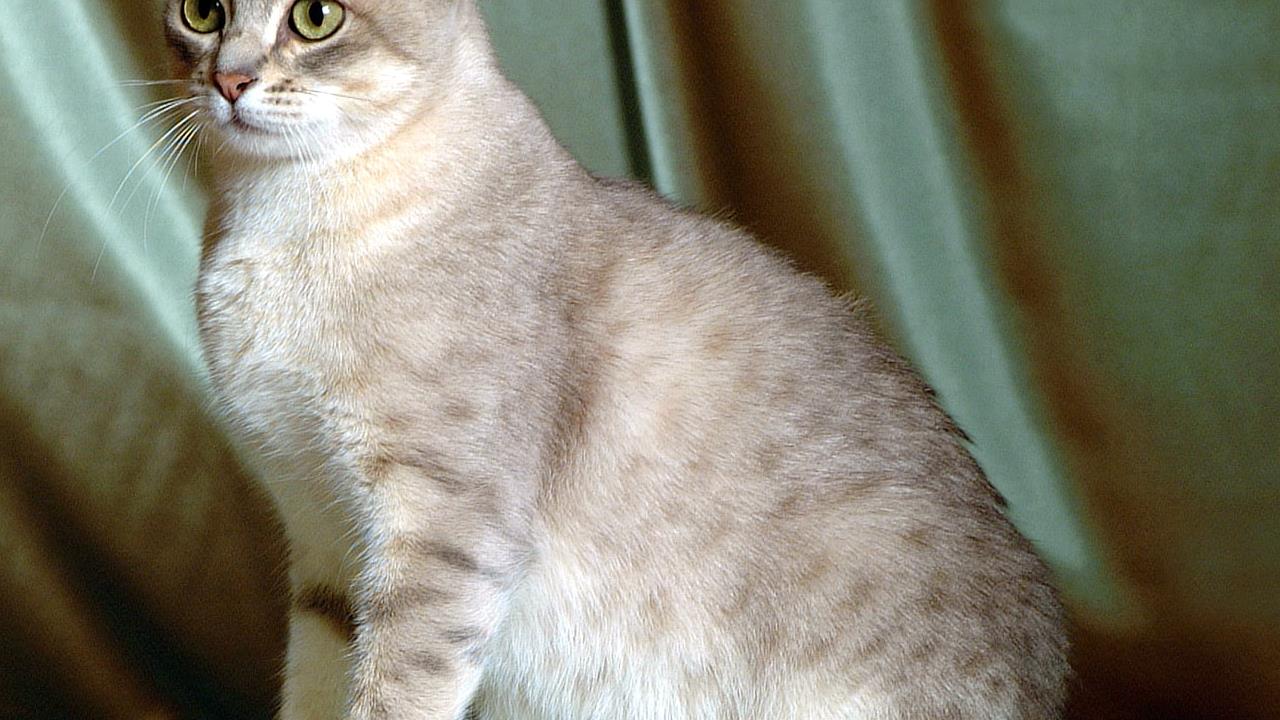
People usually search for the Australian Mist when they’re weighing up a kitten, double-checking breed facts, or trying to understand what “spotted” and “marbled” actually look like in real life. The details matter: temperament affects day-to-day life, and health claims can shape long-term costs and expectations.
The Australian Mist is an Australian-developed companion cat known for a softly “misted” coat over spots or marbling, and a steady, people-friendly manner. Below is a clear, practical profile—what the breed is, where it came from, what it’s like to live with, and what to watch for—without overstating what any cat can promise.
Australian Mist at a glance
- Size: Medium; commonly around 3–6 kg (males often heavier than females)1
- Coat: Short coat with a distinctive “mist” effect; patterns are spotted or marbled1
- Colours: Seen in several recognised colours, commonly including brown, blue, chocolate and lilac (others exist in some registries)1
- Temperament (typical): Sociable, tolerant of handling, interactive; usually settles into a calmer adult1
- Life expectancy: Often quoted around the mid-teens (some sources describe 15+ years)1
- Grooming: Low-maintenance compared with longhaired breeds; weekly brushing is often enough1
History and origin
The Australian Mist was developed in Australia from the mid-1970s by Dr Truda Straede, with a breeding goal that favoured a calm, companionable cat and a short coat with a soft-spotted look. Foundation cats included Burmese, Abyssinian, and domestic shorthairs, creating a deliberately broad base rather than a narrow, fragile line.2, 3
The breed was originally called Spotted Mist. In 1998, the name changed to Australian Mist when the marbled pattern was accepted alongside spots.1, 2
Physical characteristics: what “mist” really means
An Australian Mist is built for balance rather than extremes: medium frame, rounded head, and large eyes. The coat is short, and the hallmark is the layered look—ground colour underneath, pattern over the top, then a fine “veil” effect created by ticking in solid areas. It tends to look softer and more diffused than the sharp contrast seen in some other spotted breeds.1
Kittens can take time to show their full colouring and pattern clearly. Many owners notice the coat “settle” as the cat matures, rather than arriving fully formed at eight weeks.1
Temperament and personality
Most descriptions of the breed converge on the same picture: a cat that likes company, copes well with ordinary household handling, and stays engaged with people rather than vanishing to a distant windowsill for the whole day. As kittens they’re typically busy and curious; as adults they often become quieter, with play arriving in bursts rather than constant motion.1
Individual personality still matters. Early handling, home routine, and the temperament of the parents will shape what you actually live with—more than any paragraph on a breed page can.4
Health: what’s known, what’s often overstated
It’s common to see the Australian Mist described as “generally healthy”, and its broad foundation is often cited as a reason. That’s plausible, but it’s not a guarantee. Like all cats, Australian Mists can still develop common feline conditions over a lifetime, and any responsible breeder should be prepared to discuss health history and screening in their lines.1
One claim worth correcting: low shedding does not mean hypoallergenic. Cat allergy is usually triggered by proteins (including Fel d 1) carried in saliva and skin flakes (dander), not just loose hair. A cat that sheds less may be easier to keep tidy, but it cannot be relied on as an “allergy-safe” choice.5, 6
Routine care that actually moves the needle
- Vet care: Keep vaccinations, parasite prevention and check-ups current for your area and lifestyle.7
- Dental care: If your cat tolerates it, regular tooth brushing and dental checks reduce the chance of painful dental disease later on.7
- Weight management: Measure food, watch body condition, and build daily play into the routine—indoor cats can gain weight quietly.7
Grooming, feeding and enrichment
The coat is usually straightforward: a quick weekly brush picks up loose hair and keeps the coat looking polished. Nails, ears and teeth still need attention, even when fur doesn’t.1
For food, aim for a complete, balanced diet suited to age and desexing status, and adjust portions to keep a stable body condition rather than chasing a number on the scales. Many Australian Mists enjoy interactive feeding—treat balls, puzzle feeders, or scattered kibble—because it turns “eating” into “hunting”, without pretending they’re wild animals in the lounge room.7
Training and exercise
Australian Mists are often described as responsive to gentle training. In practice, the basics are simple: reward what you want, make the environment easy to use, and keep sessions short. They tend to do well with routine and calm handling, which makes carrier training and vet visits less of a wrestling match over time.1
Useful, low-drama goals include:
- coming when called for meals
- tolerating nail trims
- settling on a mat
- using scratching posts instead of furniture
Indoor vs outdoor: what’s safest in Australia
Many Australian owners keep cats indoors or contained to their property. It reduces the risk of road trauma, fights, snakebite, poisoning, and infectious disease, and it also reduces pressure on wildlife. If you want outdoor time, a secure cat run (“catio”) or supervised lead training offers sunlight and smells without the roaming hazards.8, 9
Living with an Australian Mist: realistic pros and cons
Pros
- Usually social and people-oriented, often fitting well into busy homes1
- Short coat that’s typically easy to maintain1
- Often content as an indoor cat when properly enriched (climbing, play, routines)1, 8
Cons
- Not “hypoallergenic”; allergies can still be significant5, 6
- Can gain weight if food and play aren’t managed, especially in indoor-only homes7
- Availability can be limited outside Australia, which may mean waitlists and travel planning
Breeding and showing (and a quick note on recognition)
If you’re buying from a breeder, look for membership in a recognised cat council, transparent pedigree records, and a willingness to discuss health, temperament and desexing arrangements. Good breeders are usually as interested in where their kittens go as you are in what you’re taking home.
Recognition varies by organisation and country. For example, the Australian Mist appears as a breed with information and a published standard through The International Cat Association (TICA).1
Final thoughts
The Australian Mist is best understood as a steady Australian companion cat: medium-sized, softly patterned, and usually keen to be near the centre of household life. If you want a cat that can handle day-to-day family movement, and you’re prepared to manage weight, enrichment and indoor safety, the breed often fits quietly and well.
References
- TICA (The International Cat Association) – Australian Mist (breed information and standard links)
- GCCF (Governing Council of the Cat Fancy) – Australian Mist (history and foundation breeds)
- TICA – Australian Mist (history and development details)
- RSPCA Knowledgebase – What should I consider before getting a cat?
- ASCIA (Australasian Society of Clinical Immunology and Allergy) – Pets and allergy
- NCBI Bookshelf – Cat allergen (Fel d 1) overview and allergy mechanisms
- WSAVA – Global Nutrition Guidelines (general principles for healthy feeding and weight management)
- RSPCA Pet Insurance – Why you should keep your cat indoors
- Eurobodalla Shire Council (NSW) – Keeping your cat safe at home (risks of roaming)

Veterinary Advisor, Veterinarian London Area, United Kingdom