
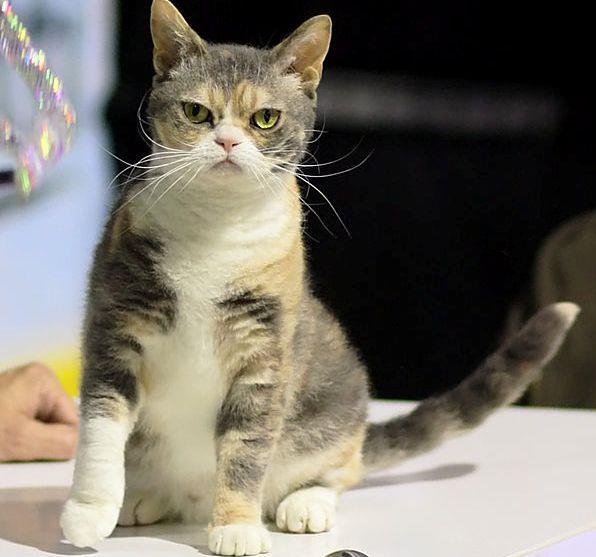
People usually look up the American Wirehair when they’ve spotted that crimped, springy coat and want to know what it really means: temperament, grooming, health, and whether the breed is as “low maintenance” as it looks.
The essentials are simple. This is a medium-sized American breed that began with a spontaneous coat mutation in upstate New York in 1966, and today it’s best known for a harsh, resilient coat that can be damaged by over-brushing.1, 2 The details below focus on what you can rely on day to day: care, behaviour, and realistic health expectations.
Origin: United States1, 2
Adult weight: medium-sized; individuals vary (males often larger than females)1, 3
Coat: short, dense, springy, “wired” texture; whiskers may be crimped1, 2
Colours/patterns: wide range of traditional colours and patterns (depending on registry standard)1, 3
Temperament: typically even-tempered, good-natured, playful, curious1, 3
Grooming: usually light; “less grooming is better” for the wired coat1, 3
History and origin
The American Wirehair began with a single, naturally occurring coat mutation in a litter of barn cats in upstate New York in 1966. That kitten became the foundation for the breed, developed alongside (and closely related in type to) the American Shorthair.1, 3
Breed recognition followed in cat registries as breeders established that the “wired” coat is inherited and reliably repeatable under careful breeding. The Cat Fanciers’ Association (CFA) notes early acceptance in the late 1960s, with championship status later granted in 1978.1
Physical characteristics
At a glance, the American Wirehair reads as a sturdy, balanced cat—rounded head, well-developed body, and a calm, open expression—very similar in overall build to the American Shorthair. The difference is the coat: dense, resilient, and coarse, with hairs that are crimped, hooked, or bent, and often whiskers that don’t sit straight.1, 3
Coat texture can vary from slightly crimped to strongly wired across the whole body. This variation is normal within the breed, and it’s one reason experienced breeders handle the coat gently rather than trying to “style” it into place.1, 3
Personality and temperament
Most American Wirehairs are described by registries as even-tempered and easy-going. They tend to be curious, alert to what’s happening around the house, and happy to join in play, but not typically frantic or demanding.1, 3
Like many cats with a solid “working-cat” ancestry, you may notice a quiet interest in movement—an insect on the window, a bird outside, a toy dragged slowly across the floor. It isn’t a guarantee of hunting prowess, just a common pattern of attention and engagement.3
Grooming and everyday care
The wired coat is not a “brush me daily” coat. In fact, over-brushing or rough combing can break the hairs and soften the texture over time.3
- Brushing: keep it minimal; use a gentle approach only when needed (for example, during heavier shedding).3
- Bathing: occasional bathing may help some individuals, particularly if the skin becomes a bit oily or sensitive; always use cat-safe products and keep it calm and brief.3
- Nails, ears, teeth: trim nails, check ears, and maintain dental care as you would for any breed.3
Food and exercise needs are typical for a medium-sized, moderately active cat. Aim for steady body condition rather than a specific number on the scales, and use play (wand toys, puzzle feeders, short chasing games) to keep movement part of the day.4
Health: what’s realistic
It’s fair to say the American Wirehair is not known for a long list of breed-specific inherited diseases. It’s not fair to claim there are “no major health concerns” or that a cat is “guaranteed healthy” because of its breed. All cats can develop illness with age, lifestyle, and genetics.3, 5
Because the breed is closely related to the American Shorthair, some sources note it may share risks seen across many domestic cats, including hypertrophic cardiomyopathy (HCM) and weight gain if activity and diet drift out of balance.5
If you’re buying a kitten, ask the breeder what health screening is done in their lines, and book an initial vet check soon after adoption. If you’re adopting an adult, focus on baseline checks (heart, teeth, weight, coat/skin) and build from there.
Breed standards and recognition
The American Wirehair is recognised by major cat registries, including the Cat Fanciers’ Association (CFA) and The International Cat Association (TICA). Breed standards focus heavily on the coat: springy, resilient, coarse to the touch, and clearly “wired” in texture, alongside a balanced, muscular body type.1, 3
In practice, “breed standard” matters most if you plan to show. For a companion animal, the useful takeaway is simpler: a true wirehair coat needs gentle handling and doesn’t reward heavy grooming.
Show and competition note
The earlier draft mentioned a “Show Hunter Competition” circuit for American Wirehairs. That isn’t a standard or recognised cat-show category in the major registries’ show frameworks. American Wirehairs are shown in cat shows under normal pedigree show classes (depending on registry rules), judged against the breed standard rather than in a hunting-themed event.1
Final thoughts
The American Wirehair is an American original: a balanced cat with a coat that feels like no other. Treated gently, that springy texture holds its own, and the personality tends to be steady—curious, companionable, and quietly playful.1, 3
References
- Cat Fanciers’ Association (CFA) – American Wirehair
- American Wirehair (overview)
- The International Cat Association (TICA) – American Wirehair
- RSPCA Australia – What should I feed my cat?
- WebMD – What to know about American Wirehair (health considerations)
- PetMD – American Wirehair (breed overview)
- WSAVA – Global Nutrition Guidelines
- International Cat Care (iCatCare) – Cat grooming

Veterinary Advisor, Veterinarian London Area, United Kingdom