
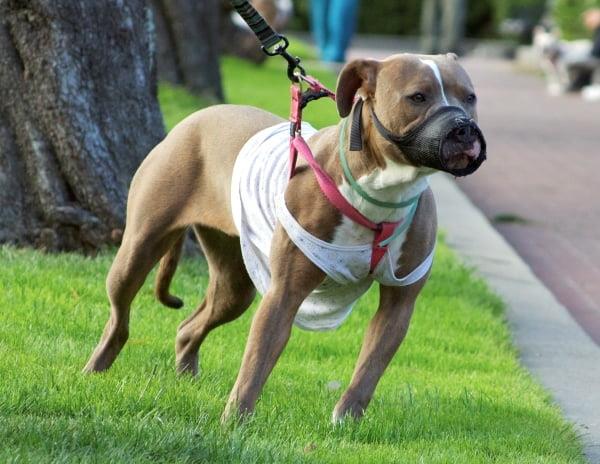
People usually land on a page like this for one of two reasons: they’re weighing up whether an American Pit Bull Terrier (APBT) will fit safely into their household, or they’re trying to untangle the legal reality of owning one in Australia. Both matter. A dog that’s managed well can be a steady companion; a dog that’s mismatched to its home, or kept unlawfully, can quickly become a serious problem.
Below is a plain-language look at what an APBT typically is (and isn’t), how daily life with one tends to run, and why Australian law treats the breed differently from many others—along with the practical implications for owners.
Quick facts (typical range)
- Size: Medium, solidly built and athletic6
- Weight: Often around 14–27 kg (varies widely by lineage and condition)6
- Height: Commonly ~43–53 cm at the withers (varies)6
- Coat: Short, smooth6
- Colours: Many colours/patterns; merle is not part of the UKC standard6
- Energy: High; needs daily exercise and training structure
First, a naming reality check
“Pit bull” is often used as a loose label for several bull-type dogs (and mixes) with similar build and head shape. The American Pit Bull Terrier is a specific breed recognised by the United Kennel Club (UKC) and the American Dog Breeders Association (ADBA), but it is not recognised by the American Kennel Club (AKC).6
This matters because paperwork, appearance, and everyday language don’t always line up. In Australia, identification is often done against an approved “standard” for restricted breeds rather than a pedigree name alone.9
History and origin (brief, accurate context)
The APBT developed from bull-and-terrier type dogs in the 1800s, with roots in the British Isles, and was later established in the United States. Like many working breeds of the era, it was used in a range of roles depending on the owner and the setting—some admirable, some cruel.6
That history still shadows the breed’s reputation, but it doesn’t replace the day-to-day truth that behaviour is shaped by early life, handling, training, health, and management.
Temperament: what people often notice in real life
Well-raised APBTs are commonly described as people-focused, energetic, and responsive to training. They tend to do best with clear boundaries and calm, consistent handling rather than harsh corrections.
Two practical notes are worth keeping in view:
- Intensity is normal. Many are athletic and persistent. Without enough exercise and mental work, that energy spills into the house.
- Dog-to-dog issues can occur. Some individuals are selective with other dogs, particularly as they mature. Early, sensible socialisation helps, but it doesn’t guarantee universal friendliness.
Training and socialisation
Start early, keep it simple, and stay consistent. Short sessions, repeated daily, usually work better than occasional long ones.
- Focus on foundations: recall, loose-lead walking, settle on a mat, calm greetings, and comfortable handling (ears, paws, mouth).
- Use rewards and management: food, play, and access to what the dog wants (sniffing, moving forward) build reliable habits.
- Socialisation means “safe exposure”, not forced interaction: the goal is a dog that can remain calm around people, dogs, traffic, and noise.
Exercise and daily care
Most APBT-type dogs need steady daily movement plus something that uses their brain. A brisk walk alone often isn’t enough.
- Physical work: two active outings per day is common (adjust to age, weather, and fitness).
- Mental work: training games, scent work, food puzzles, and structured play.
- Containment: secure fencing and supervision reduce escapes and neighbourhood conflict—especially important where the breed is regulated.
Health: common issues to watch for
Like many medium-to-large, muscular dogs, hip dysplasia is a known risk. It’s influenced by multiple factors including heredity, growth, nutrition, and exercise, and it can lead to osteoarthritis over time.1
Skin problems (including allergies and secondary skin infections) are also commonly reported by owners of short-coated breeds, and they’re worth budgeting for—both in time and vet visits. Any persistent itch, ear inflammation, or recurrent “hot spots” deserves a proper work-up rather than endless shampoo swaps.
Legal issues in Australia: restricted breed rules are real
In Australia, the American Pit Bull Terrier (or “pit bull terrier”) is one of the breeds prohibited from importation as a pure breed.2, 3
Within Australia, rules vary by state and territory. Several jurisdictions treat APBTs as a restricted or prohibited breed, with additional controls on ownership and handling. For example:
- New South Wales: APBTs are listed as “restricted dogs”, and owners must comply with strict control requirements (including enclosure standards, muzzling/leashing outside the enclosure, desexing, and permit/registration obligations).4, 5
- Victoria: restricted breed dogs are defined by whether a dog fits an approved standard (and may be pure or cross bred); APBTs are included. There are also specific requirements around muzzling/leashing and restrictions on transfer of ownership.9, 10
- Queensland: APBTs are listed among prohibited dog breeds under state law, with restrictions and penalties described by the Queensland Government.8
If you’re considering an APBT in Australia, the first step is not choosing a lead or a food bowl—it’s checking your state rules and your local council requirements, in writing, before you commit.
Media, myths, and what the evidence tends to support
Public arguments about “dangerous breeds” can get loud, but professional bodies tend to emphasise a quieter point: dog aggression and bite risk are shaped by multiple factors, and breed alone is a blunt instrument. That’s why major animal welfare and veterinary organisations have argued against breed-specific legislation as a primary tool for preventing dog attacks.7
Whatever the label on the dog, the essentials remain steady: early intervention, secure containment, competent handling, and honest assessment of what you can manage every day.
Final thoughts
An American Pit Bull Terrier is not a casual choice. The breed’s athletic build, drive, and public perception mean you’ll be living with consequences—good and bad—more visibly than many owners expect.
If you’re in Australia, the legal side may decide things for you. If ownership is lawful where you live, a well-managed APBT can be a calm, responsive companion. The work is not mysterious, but it is daily: training, exercise, supervision, and thoughtful boundaries.
References
- Merck Veterinary Manual (Pet Owner): Hip Dysplasia
- Department of Agriculture, Fisheries and Forestry (Australia): Cats and dogs FAQs (ineligible dog breeds)
- Australian Border Force: Importing animals (dangerous breeds of dogs prohibited from import)
- NSW Office of Local Government: Restricted Dogs
- NSW Office of Local Government: Control requirements for restricted dogs
- American Pit Bull Terrier (breed recognition and general characteristics overview)
- RSPCA Australia: View on breed-specific legislation
- Queensland Government: Regulated dogs (prohibited dog breeds list)
- Agriculture Victoria: Restricted breed dogs (definition and declaration process)
- Agriculture Victoria: Owning a restricted breed dog (owner requirements)

Veterinary Advisor, Veterinarian London Area, United Kingdom