
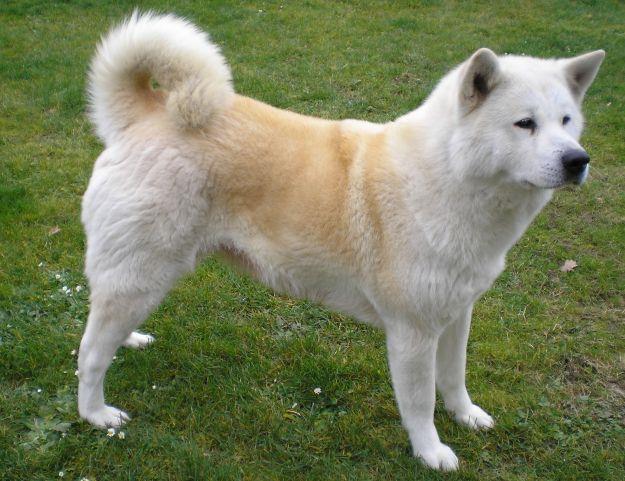
People usually look up Akita breed characteristics when they’re weighing up whether this is the right dog for their household—or when they’ve already got one and want to understand the size, coat, temperament, and health risks before problems start.
Akitas are powerful, quiet dogs with strong opinions and a thick coat that arrives in your home as a full-time presence. The details matter here: the wrong expectations can turn into training struggles, dog-to-dog conflict, or avoidable health and welfare issues. What follows is a clear, practical profile—what an Akita is like to live with, and what they tend to need to stay well.
At a glance: Akita breed profile
- Size: large, heavy-boned, strong. Adult height is typically about 61–71 cm at the shoulder (males 66–71 cm; females 61–66 cm).1
- Coat: dense double coat with harsh outer coat and thick undercoat; seasonal “coat blow” can be intense.1
- Colours: common colours include white, brindle, and pinto (patches on a white background), along with other shades; some colours/patterns are disallowed in standards (for example, merle).1
- Temperament: dignified, alert, courageous; often reserved with strangers and may be intolerant of other dogs (especially same sex).1
- Training: best with calm, consistent handling and early socialisation; not a “do what I say, always” breed.
- Exercise: daily walks and structured activity; mental work matters as much as kilometres.
- Health: increased risk of hip dysplasia and several immune-mediated conditions; some lines can be affected by eye disease such as progressive retinal atrophy (PRA).3, 4, 5
Temperament and behaviour
An Akita tends to move through the house like a quiet sentry—watchful, self-contained, and deeply bonded to their own people. Many are affectionate at home, but not typically effusive with strangers, and they often prefer a small circle.
Breed standards describe the Akita as “alert and responsive, dignified and courageous”, with a tendency to be intolerant of other dogs.1 In day-to-day life, that can look like:
- strong territorial awareness (especially around the home and car)
- selective sociability with unfamiliar dogs
- calm presence indoors when their needs are met
- quick escalation if pushed in close, chaotic dog settings
Children and visitors
Akitas can live well in families, but supervision matters. Their size, strength, and tendency to guard space means they’re usually better suited to homes where children can follow clear rules: no hugging, no climbing, no food games, no pestering when the dog is resting.
With visitors, aim for quiet management rather than “forced friendliness”. Give the dog a place to settle, and let greetings happen slowly—if the dog chooses.
Other pets
Some Akitas coexist peacefully with other animals, especially if raised alongside them. Others won’t. Early, careful socialisation helps, but it doesn’t erase genetics. Expect that many Akitas will be dog-selective, and plan your home and walking routine accordingly.1
Training and socialisation
Akitas are intelligent, but not reliably compliant. Training works best when it’s predictable, fair, and quietly consistent—short sessions, clear boundaries, and rewards that matter to the dog.
Early socialisation is less about making an Akita “love everyone” and more about teaching calm neutrality: different people, hats, prams, traffic noise, other dogs at a distance, and being handled gently for grooming and vet checks.
Practical training focus
- Recall: practise on a long line for months; don’t gamble in off-lead areas.
- Lead skills: reward a loose lead from the start—Akitas get strong fast.
- Handling: paws, ears, brushing, teeth—teach cooperation early.
- Dog neutrality: build calm “look and move on” behaviour around other dogs.
Exercise and enrichment
An Akita usually doesn’t need endless running, but they do need daily structure. A steady routine—walks, sniffing time, basic obedience, puzzle feeding—helps prevent the bored, heavy, watchful energy that can turn into reactivity.
Good activities for many Akitas include brisk lead walks, hiking on leash, scent games, and controlled strength work (like slow hill walking). If jogging, build up gradually and check with your vet, especially in young dogs whose joints are still developing.
Grooming and coat care
The Akita’s double coat is built for cold weather: a harsh outer coat and a dense undercoat underneath.1 Most of the year, brushing a few times a week is usually enough to keep the coat aired and reduce shedding around the house.
When they “blow coat”, the undercoat releases in large amounts. During these weeks, daily brushing is often the difference between a manageable coat and a felted, itchy mess. Use an undercoat rake carefully, and stop if you’re scraping skin.
- Bathing: occasional baths are fine; rinse thoroughly, especially in the undercoat.
- Nails: trim regularly—large dogs can split nails badly.
- Ears and teeth: check ears weekly and keep up dental care.
Health: what Akita owners should watch for
Akitas are sturdy dogs, but they’re not carefree. Two broad themes show up often: orthopaedic wear-and-tear in a heavy body, and immune-mediated disease in a genetically narrow population.
Hip dysplasia (and secondary arthritis)
Hip dysplasia is an abnormal development of the hip joint that can lead to degenerative joint disease (osteoarthritis). It’s influenced by genetics, growth, nutrition, and other factors, and it is common in larger breeds.3 Keeping an Akita lean and well-muscled is one of the simplest protective steps you can take.
Immune-mediated and autoimmune conditions
Akitas are over-represented in several immune-mediated conditions. Veterinary references describe a syndrome of meningitis (sometimes with polyarthritis) reported in young Akitas, and note associations with other immune problems (including thyroiditis and skin/eye disease).4
Separately, research literature describes uveodermatologic (VKH-like) syndrome in Akitas, involving uveitis and depigmenting skin disease, and discusses genetic associations within the breed.6
Eye disease (including PRA)
Progressive retinal atrophy (PRA) is a group of inherited retinal degenerations that typically begin with night blindness and can progress to complete blindness.7 PRA has been reported in Akitas, including published veterinary case reports describing heritable generalised retinal atrophy in the breed.5, 7
If your Akita hesitates in dim light, startles more at night, or seems to “miss” moving objects, book a veterinary eye check—early diagnosis helps you adjust the dog’s environment safely.
Routine prevention that matters
- keep your Akita lean (you should be able to feel ribs under a light layer)
- ask your vet about joint monitoring, especially during growth and middle age
- stay consistent with parasite control and dental care
- choose breeders who health-test and can discuss family health history in plain terms
Diet and feeding
Feed for steady growth and lifelong leanness. A large, fast-growing puppy that’s overfed can put extra stress through developing joints. Aim for a complete, balanced diet suited to life stage (puppy/adult/senior), and adjust portions to your dog, not the packet.
Most adult Akitas do well on two meals a day. Fresh water should always be available.
Living conditions: what suits an Akita
Akitas can adapt to many homes, including smaller spaces, as long as they get daily exercise and calm structure. What matters more than yard size is management: secure fencing, safe separation from visitors when needed, and thoughtful routines around other dogs.
They are not “outdoor-only” dogs. The coat protects against cold, but it doesn’t replace companionship, supervision, and a stable environment—especially in heat.
History and cultural place
The Akita comes from northern Japan, where robust spitz-type dogs were developed for demanding work in cold conditions. The breed holds a special place in Japan, including the tradition of giving an Akita figure as a symbol linked with health, happiness, and long life.8
Hachikō (dates that matter)
Hachikō, an Akita born on 10 November 1923, became famous for returning to Shibuya Station after his owner’s death in May 1925 and continuing to wait there for years. He died on 8 March 1935.2, 9
Stories like Hachikō’s are often told as simple loyalty tales, but they also hint at something practical: many Akitas form strong, enduring bonds and can be deeply routine-oriented.
Final thoughts
An Akita is not a casual choice. They’re striking, self-possessed dogs—often calm at home, often selective in public, and always physically capable. With early socialisation, steady training, and health-aware care, they can be devoted companions for the right household. Without those foundations, their strength and sharp boundaries tend to do what nature designed them to do: hold their ground.
References
- Akita Club of America — AKC Akita Standard (effective 28 Aug 2022)
- Akita Club of America — Hachikō
- Merck Veterinary Manual (Pet Owner Version) — Hip Dysplasia in Dogs
- Merck Veterinary Manual — Hypersensitivity Diseases in Animals (notes on Akita-associated meningitis/polyarthritis and related immune disease)
- PubMed — Generalized progressive retinal atrophy in two Akita dogs
- PubMed — Uveodermatologic (VKH-like) syndrome in American Akita dogs (genetic association study)
- American Kennel Club — Progressive Retinal Atrophy (PRA) in Dogs: What to Know
- KenichiAI — About Akita: History (includes cultural tradition of Akita statue symbolising health, happiness, and long life)
- Wikipedia — Hachikō

Veterinary Advisor, Veterinarian London Area, United Kingdom