
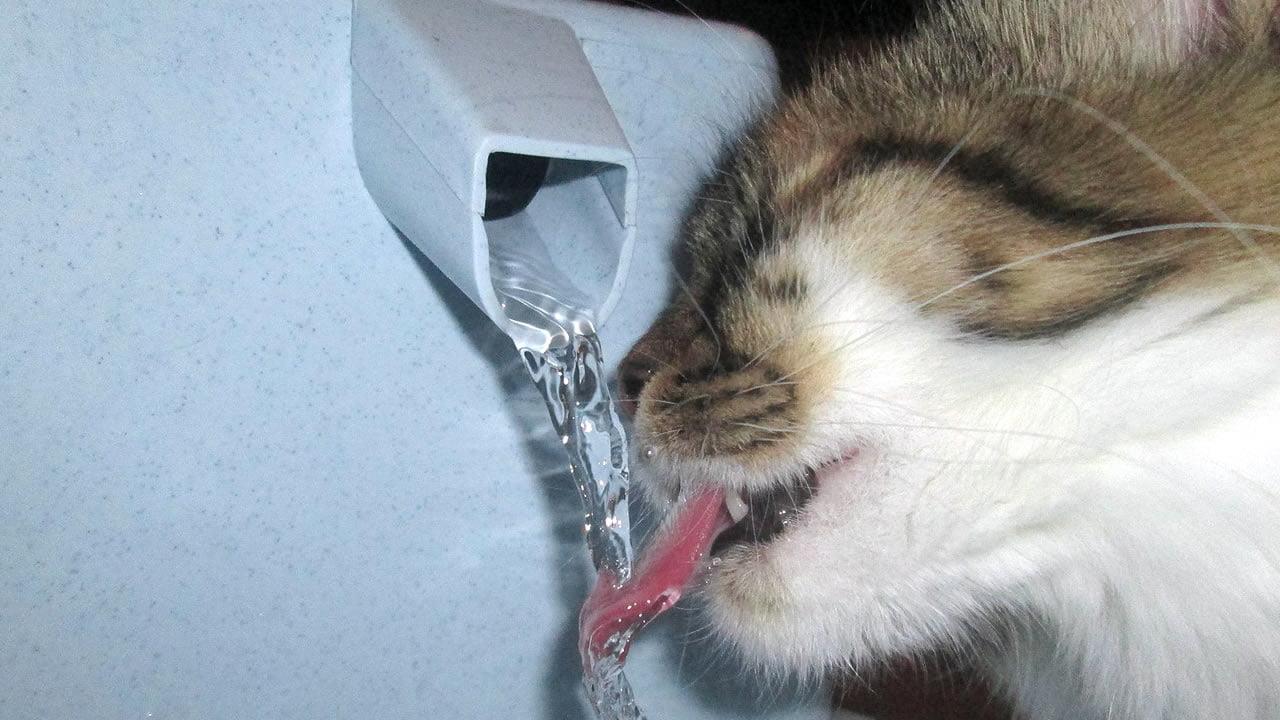
When a cat suddenly seems glued to the water bowl, it’s rarely just a quirky phase. Extra drinking can be the first visible sign of a common medical problem—kidney disease, diabetes, an overactive thyroid—or it can be something simpler, like a change to dry food or hot weather.
The useful starting point is a calm baseline: roughly how much is “normal” for cats, what counts as “too much”, and what your vet will look for. From there, you can decide whether to monitor at home for a day or two, or book an appointment sooner.
What “normal” looks like for cat water intake
There isn’t one perfect number, because a cat’s total water intake comes from both drinking and food. A commonly used guide is around 50 mL per kilogram of bodyweight per day (from all sources), which is roughly 200–250 mL/day for a 4–5 kg cat.1
In day-to-day clinical practice, many healthy cats on wet food drink very little. A useful red flag is when drinking becomes clearly increased compared with that cat’s usual pattern, especially alongside more urine in the litter tray.
When is it considered excessive?
“Polydipsia” (excessive thirst) is often defined as water intake above about 45 mL/kg/day in cats, and many veterinary references use >100 mL/kg/day as clearly abnormal.2, 3
Quick home check: measure what your cat drinks
If your cat is otherwise bright and stable, measuring intake for 24–48 hours gives your vet far more to work with than guesswork. It also helps you separate “seems like more” from “is more”.
- Tip out and refill each water source with a measured amount.
- Keep a note of any top-ups during the day.
- After 24 hours, measure what’s left and calculate the difference.
- If you have multiple pets, accurate measuring usually means separating them or using a single controlled water source.4
Important: don’t restrict water to “test” thirst. If the drinking is compensating for illness, limiting water can make a cat much sicker.
Common reasons a cat drinks more water
Increased thirst is usually tied to increased urine production (the body is losing more water, so the cat replaces it). Vets often talk about these together as PU/PD: polyuria (more urine) and polydipsia (more drinking).
Diet and environment (often benign, but worth noting)
Cats on dry food usually need to drink more because kibble contains far less moisture than wet food. Wet diets can cover much—or sometimes nearly all—of a cat’s daily water needs.1
Warm weather, indoor heating, increased activity, and recent changes at home can also nudge water intake upwards for a few days.
Medical causes that deserve prompt attention
- Chronic kidney disease (CKD): early signs commonly include increased thirst and urination as the kidneys lose concentrating ability.5
- Diabetes mellitus: excess glucose spills into urine and drags water with it, driving bigger urine volumes and thirst.
- Hyperthyroidism: an overactive thyroid can increase thirst and urine output, often with weight loss despite a good appetite.
- Urinary tract problems: cats with bladder inflammation may visit the tray more often (sometimes producing only small amounts). This can be mistaken for “urinating more”, so the full pattern matters.
- Medication effects: corticosteroids and some diuretics can increase thirst and urination.
- Less common causes: conditions affecting antidiuretic hormone (diabetes insipidus) can produce very dilute urine and marked drinking, but this is uncommon in cats.6
Why “drinking too much” matters
Excess drinking itself isn’t usually the harm. It’s the signpost. A cat may be drinking more to keep up with fluid losses from kidneys or hormones that aren’t behaving normally.
Also, the original draft’s claim that “excessive water intake can lead to dehydration” needs tightening. Drinking more is typically a response to dehydration risk (through increased urine losses). A cat can still become dehydrated if they cannot keep up with those losses or if illness reduces intake.
Signs to book a vet visit sooner
Arrange a veterinary appointment promptly if increased drinking is paired with any of the following:
- noticeably larger clumps in the litter tray, or more frequent urination
- weight loss, reduced grooming, lethargy, vomiting, or reduced appetite
- behaviour changes (restlessness, yowling at night, hiding)
- accidents outside the litter tray, straining, or blood in urine
If your cat seems unwell, dehydrated, or cannot keep water down, treat it as urgent.
What your vet will check (and why)
Most work-ups begin with history, an exam, and a few core tests that map hydration and organ function:
- Urinalysis (including urine specific gravity) to see how well the kidneys are concentrating urine and whether glucose, protein, crystals, or infection markers are present.7
- Blood tests to assess kidney values, electrolytes, glucose, and thyroid hormone (especially in older cats).
- Blood pressure is often considered when kidney disease is suspected.
- Imaging (ultrasound or X-ray) if the picture suggests kidney changes, stones, or other structural issues.
In more complex PU/PD cases, vets may discuss specialised testing (performed under veterinary supervision) to differentiate uncommon causes, such as diabetes insipidus versus primary polydipsia.6, 3
Supporting hydration safely at home
While you’re arranging assessment—or for cats that simply need encouragement to drink—small environmental tweaks can help without forcing anything.
- Offer multiple water stations in quiet, easy-to-reach locations.
- Try a wide, shallow bowl (some cats avoid bowls that brush their whiskers).
- Keep water fresh and bowls clean.
- Consider a fountain if your cat prefers moving water.
- If appropriate for your cat, increase wet food or add extra water to wet meals (discuss diet changes with your vet if your cat has medical conditions).1, 8
Common misconceptions (fixed)
“Cats should only drink 50–60 mL a day.”
This is incorrect. Cats commonly need around 40–50 mL/kg/day (total water from food + drinking). For a 4 kg cat, that’s closer to ~200 mL/day, though wet food may supply much of it.1
“If my cat is drinking more, I should limit water.”
Don’t. Increased drinking is often compensatory, and restricting water can worsen dehydration and underlying disease.
Final thoughts
A cat’s drinking habits are quiet data, collected in small sips. When the pattern changes, it’s worth listening—measuring intake over a day or two, noting any changes in urination, weight, appetite, and energy, then taking those observations to your vet. The cause is often identifiable, and early treatment is usually gentler than late treatment.
Abnormal water intake in cats
References
- Royal Canin Academy — Water requirements and drinking habits of cats
- dvm360 — The ins and outs of polyuria and polydipsia in veterinary practice
- Journal of Feline Medicine and Surgery (via PMC) — Probable primary polydipsia in a domestic shorthair cat
- The Cat Clinic (Australia) — Water intake test for cats drinking too much
- Merck Veterinary Manual — Renal dysfunction (CKD) in dogs and cats
- Merck Veterinary Manual — Diabetes insipidus in animals
- Merck Veterinary Manual — Urinalysis (including urine specific gravity)
- Pet Circle (Australia) — Vet tips to increase your cat’s water intake

Veterinary Advisor, Veterinarian London Area, United Kingdom